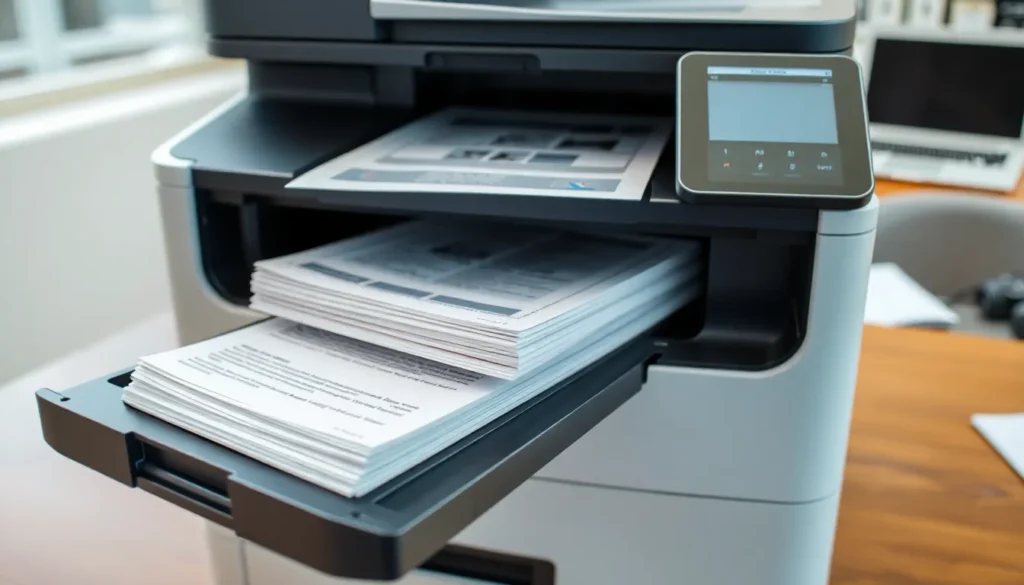
In the world of printing, “collate” might sound like a fancy word reserved for highbrow literary discussions, but it’s actually a game-changer for anyone who’s ever faced a mountain of paper. Imagine you’ve just printed a stack of reports, and instead of a chaotic jumble, you want them perfectly organized. That’s where collating struts in like a superhero ready to save the day.
Collating means arranging printed pages in a specific order, usually for multi-page documents. It’s the difference between handing someone a disorganized pile of paper and presenting them with a neat, ready-to-go report. So whether you’re tackling a school project or preparing for a big meeting, understanding what collate means in printing can make your life a whole lot easier—and your documents a lot more impressive. Who knew a little word could pack such a punch?
Understanding Collation in Printing
Collation refers to the systematic arrangement of printed pages in a predetermined sequence. This process is crucial for creating organized documents, ensuring that each set aligns correctly for easy reading and presentation. In professional environments, the significance of collating becomes apparent during the preparation of reports, proposals, and manuals, where clarity matters.
Collating facilitates the assembly of multi-page documents, making tasks more efficient. For instance, when printing a 100-page report, collated printing automatically produces each complete copy in order. Users can choose to collate or print in groups, affecting job setup and output efficiency.
Options vary for collating during printing jobs. Some printers offer a collate setting, allowing users to select whether to print complete sets or individual pages grouped together. This choice can save time and reduce manual sorting after printing is complete.
Understanding the benefits of collating aids in effective document management. For example, during meetings, presenting well-organized materials fosters a professional image. Teachers can employ collating to manage projects, providing students with ready-to-use handouts that maintain structure.
Knowledge of collating features on printers can enhance productivity. Familiarity with printer settings ensures an organized printing workflow. He or she may want to experiment with different settings to find the most efficient process for their specific needs.
Mastering collation in printing streamlines document preparation and improves overall presentation. By grasping this concept, individuals can create polished and professional materials easily.
The Definition of Collation
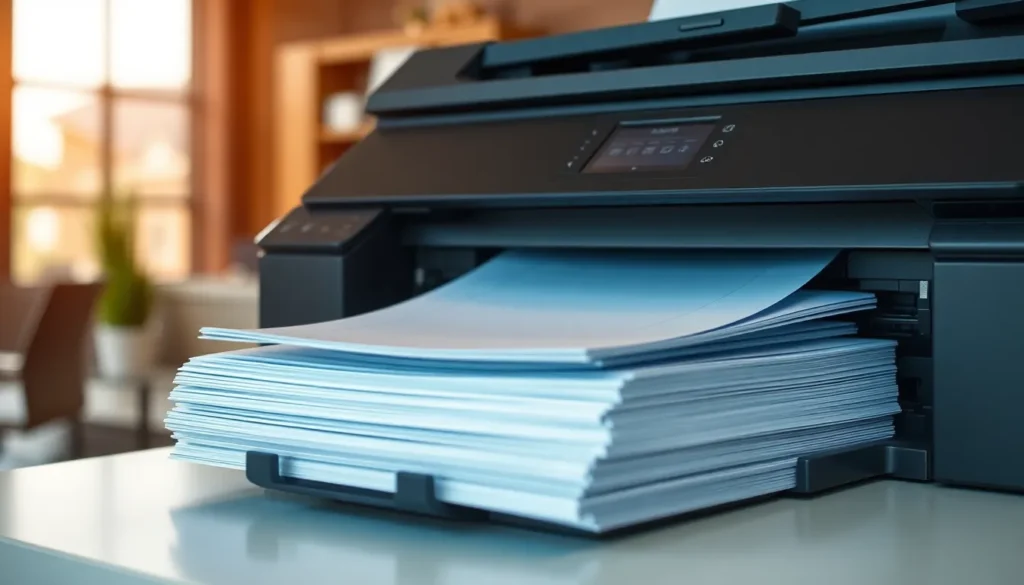
Collation in printing refers to the arrangement of pages in a specific sequence. This process is crucial for transforming disordered stacks of paper into cohesive documents.
Importance of Collation
Collation streamlines the printing process by ensuring multi-page documents print in the correct order. Without it, users might face the chaotic task of sorting pages manually. Effective collation enhances the clarity of reports, proposals, and manuals in professional environments. It also reinforces a polished image during presentations and meetings. When teachers use collation, they find it easier to manage student projects and submissions. By using various collating options provided by printers, individuals can achieve efficiency and organization. This approach saves time and effort, allowing users to focus on content rather than sorting logistics.
How Collation Works in Printing
Collation plays an essential role in organizing printed materials efficiently. Understanding the differences between manual and automatic collation can help individuals choose the best method for their needs.
Manual vs. Automatic Collation
Manual collation requires users to sort pages by hand after printing. This method can lead to errors and take considerable time, especially for lengthy documents. Automatic collation, on the other hand, utilizes printer settings to stack pages in the correct order during the printing process. It significantly reduces the risk of misalignment and expediting the workflow, especially for large projects. Many modern printers offer automatic collation as a standard feature, enhancing convenience and productivity in various settings.
Different Methods of Collation
Several methods exist for achieving effective collation in printing. Digital collation involves using software applications that arrange and send documents to the printer in the correct sequence. Another method is physical collation, where printed pages are gathered and sorted manually or through physical devices like collators. Additionally, cloud-based solutions streamline collation by allowing users to access and organize files remotely. Each method offers unique advantages, catering to specific situations and preferences in both personal and professional environments.
Benefits of Using Collation in Printing
Collation offers several advantages for both personal and professional printing tasks. Efficiency stands out as a primary benefit, allowing users to print multiple sets of documents in the correct order. This saves time and minimizes the risk of errors that can arise from manual sorting.
Organized documents create a polished impression during presentations, enhancing professionalism in business settings. Individuals can streamline their workflow by utilizing automatic collation, reducing the effort needed to manage printed materials. Clarity improves significantly when pages are arranged logically, aiding readers in navigating the information easily.
Consistency represents another key benefit of collation. Each set of documents maintains uniformity, which is particularly crucial for proposals and reports. Users experience reduced stress when gatherings, such as meetings or school projects, involve a stack of well-organized pages.
Flexibility in printing options contributes to its overall effectiveness. Various printers offer different collation settings, accommodating multiple user preferences and requirements. Whether for small-scale projects or larger corporate tasks, tailored collation methods make the printing process more manageable.
Cost-effectiveness also plays a role in the decision to use collation. Reducing waste by avoiding misprints and reprints saves money over time. Users who combine these benefits enjoy a smoother printing experience, making the preparation of documents far less daunting.
Focusing on the advantages of collation enhances the ability to produce high-quality materials quickly. Overall, investing in this printing technique guarantees improved organization and professional presentation, which benefits individuals and organizations alike.
Common Misconceptions About Collation
Collation doesn’t mean printing multiple copies of a document in one go. Many people confuse the term with simply duplicating pages. Instead, collation refers specifically to the organization of pages in a proper sequence.
Another misconception is that collation is only relevant in professional settings. In reality, even students can benefit from understanding how to collate documents effectively. Properly arranged pages can make school projects more presentable and easier to manage.
Individuals often think that manual collation is the only method available. Automatic collation, however, is increasingly common with modern printers. This feature allows users to save time and effort by relying on printer technology to manage page arrangement.
Some believe that collated documents are less useful for informal settings. Well-organized materials enhance clarity regardless of the context, making information easier to follow. Presentations, reports, and proposals all stand to benefit from meticulous collation.
Many assume that collation only applies to physical documents. Digital collation also plays a significant role, especially with software that organizes files electronically. Cloud-based solutions enable remote access and help maintain order in personal and professional documents.
Cost concerns often deter individuals from investing in collation features. However, efficient collation saves money by minimizing print errors and reprints. Reducing waste from misaligned documents proves advantageous for both individuals and organizations.
Understanding collation leads to improved efficiency, higher-quality presentations, and better organization. Dispelling these misconceptions allows for a clearer grasp of how collation enhances printed materials.
Collation in printing is a vital process that enhances the organization and presentation of documents. By understanding and utilizing collation techniques, individuals can streamline their printing tasks and improve overall efficiency. Whether in a professional setting or for personal projects, well-collated materials foster clarity and professionalism.
Investing in automatic collation features not only saves time but also reduces the likelihood of errors. As users become more familiar with various collation methods, they’ll find that creating cohesive documents becomes easier and more effective. Ultimately, mastering collation is a key step toward achieving polished and organized presentations in any context.