Imagine lounging on your couch, ready to binge-watch your favorite show, but you’re stuck squinting at your iPhone screen. Sounds like a nightmare, right? Sharing your iPhone screen on your TV can transform that tiny display into a cinematic experience. Whether you’re showing off vacation photos or streaming the latest hit series, it’s time to elevate your viewing game.
Overview Of Screen Sharing
Screen sharing allows users to mirror their iPhone displays on a TV, providing a larger visual experience. This process makes it simple to enjoy videos, presentations, and photos with family and friends. Several methods exist for achieving screen sharing, including Apple’s AirPlay, HDMI cables, and third-party apps.
AirPlay serves as a primary option for wireless screen sharing. Utilizing compatible devices such as Apple TV, AirPlay lets users stream video and audio seamlessly. Compatible apps include YouTube, Netflix, and many more, ensuring a hassle-free experience.
HDMI adapters offer a straightforward wired alternative. By connecting an adapter to the iPhone’s Lightning port, it allows users to link directly to a TV’s HDMI input. This method supports all content types, providing a reliable connection without delay.
Third-party apps expand sharing options even further. Various applications like Reflector or ApowerMirror enable users to share their screens across devices. These apps often provide additional features, such as recording and screenshot capabilities, enriching the screen-sharing experience.
Understanding the methods of screen sharing enhances the interaction with multimedia content. Following the appropriate steps ensures that users can easily connect their iPhones to larger displays. Familiarity with these techniques increases the likelihood of creating memorable shared experiences.
Prerequisites For Sharing Your iPhone Screen
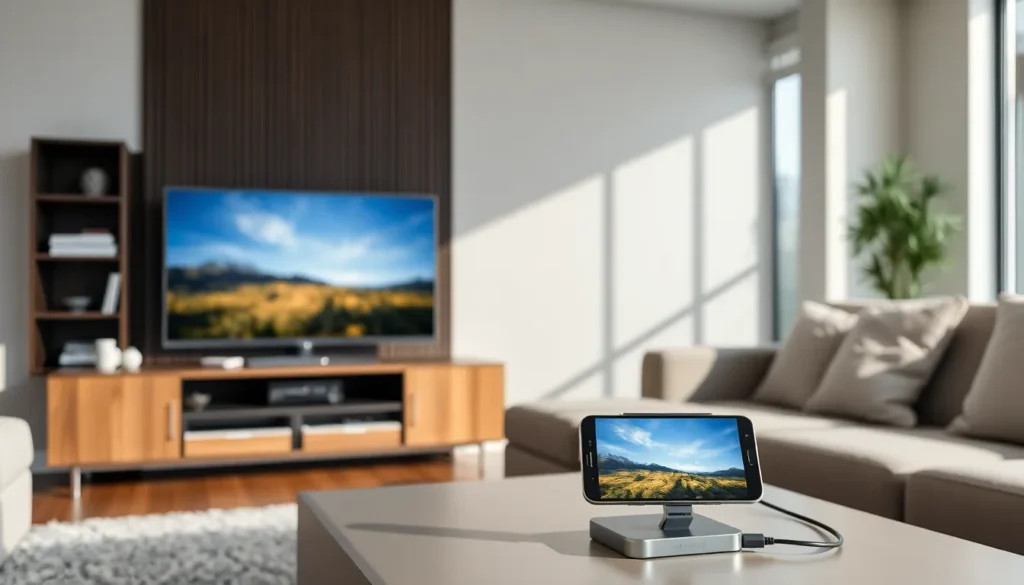
Sharing an iPhone screen on a TV requires specific devices and accessories to function correctly. Ensuring compatibility guarantees a smooth connection and optimal performance.
Compatible Devices
iPhone models from 5 and newer support screen sharing. Apple TVs set from the third generation onward enhance the experience. Smart TVs with AirPlay support facilitate wireless connections. Third-party streaming devices like Roku and Chromecast also work with compatible apps. Understanding these devices creates a foundation for effective screen sharing.
Required Apps and Accessories
AirPlay is a vital app for wireless screen sharing. HDMI adapters provide an easy way for wired connections, especially for those who prefer a stable setup. Third-party apps like Reflector and ApowerMirror extend functionality for those needing extra features, such as screen recording. Having the right accessories, like an HDMI cable or adapter, ensures seamless connectivity. Ensuring access to these apps and accessories facilitates a successful experience when sharing an iPhone screen on a TV.
Methods To Share Your iPhone Screen On TV
Sharing an iPhone screen on a TV can be achieved using various methods. Here’s a look at three effective ways to connect your device.
Using AirPlay
AirPlay offers a wireless solution for sharing an iPhone screen. By opening Control Center and selecting Screen Mirroring, users can find their compatible Apple TV or AirPlay-enabled device. Once selected, content displays on the TV while the iPhone retains full control. It’s essential to ensure that both the iPhone and the TV are connected to the same Wi-Fi network for seamless streaming. This method provides a lag-free experience, perfect for watching videos or giving presentations.
Using HDMI Cable
A direct connection via HDMI cable provides a reliable alternative to wireless options. Users require a Lightning to HDMI adapter to connect their iPhones directly to the TV. After plugging the adapter into the iPhone and the HDMI cable into the TV, selecting the corresponding HDMI input displays the content. This method guarantees a stable connection and outstanding picture quality. It’s particularly useful in areas with weak Wi-Fi signals, ensuring uninterrupted access to multimedia.
Using Third-Party Apps
Third-party apps expand options for sharing an iPhone screen. Apps like Reflector and ApowerMirror facilitate connections to various devices. Users install these apps on their TV or computer, making it easy to mirror their screens over Wi-Fi. Different apps offer features such as recording capabilities or screen captures, enhancing user experience. Choosing the right app ensures compatibility with specific devices, allowing for tailored functionalities when displaying content on a larger screen.
Troubleshooting Common Issues
Users may encounter various issues while sharing their iPhone screen on a TV. Addressing these common problems can enhance the mirroring experience.
Connection Problems
Connection issues frequently arise during screen sharing. Ensure both the iPhone and TV are connected to the same Wi-Fi network. Sometimes, restarting both devices resolves connectivity problems. Checking for software updates on the iPhone and the TV can also improve compatibility. AirPlay might require enabling on the TV’s settings, so verifying this option proves helpful. If using an HDMI connection, ensure the cable and adapter are securely inserted. Testing with another HDMI port can clarify if the issue lies with the port.
Performance Issues
Performance challenges can affect the screen sharing experience. Lagging or choppy video playback often results from a weak Wi-Fi signal. Positioning the router closer to the TV can strengthen the connection. An overloaded network can also lead to performance issues, so disconnecting other devices can help. When using third-party apps, confirm they are updated to their latest versions to benefit from performance enhancements. Restarting the iPhone can also clear temporary glitches, improving overall functionality during screen sharing.
Sharing an iPhone screen on a TV opens up a world of possibilities for enhanced viewing experiences. Whether it’s for sharing cherished memories or enjoying favorite shows with family and friends, the methods discussed provide flexibility and convenience.
With options like AirPlay for wireless connections or HDMI adapters for a reliable wired setup, users can easily find a solution that suits their needs. Third-party apps further expand the potential for screen sharing, offering unique features to enrich the experience.
By understanding the prerequisites and troubleshooting tips, anyone can enjoy seamless screen sharing and create memorable moments on a larger display. Embracing these techniques transforms how users interact with their multimedia content, making every viewing experience more enjoyable.