In a world where first impressions matter, magazine design isn’t just about pretty pictures and catchy headlines; it’s a visual feast that can make or break a reader’s interest. With countless publications vying for attention, finding the right design inspiration can feel like searching for a needle in a haystack—except the haystack is also filled with glitter and confetti.
Overview of Design Inspiration for Magazines
Design inspiration for magazines stems from a variety of sources, each contributing to visual storytelling. Trends in graphic design, fashion, and art play a pivotal role in shaping modern magazine aesthetics. Utilizing color palettes effectively enhances reader engagement and creates a memorable experience.
Typography significantly influences the overall design, providing clarity and setting the tone for content. Innovative layouts draw attention, ensuring that images and text work harmoniously together. Incorporating whitespace allows for breathing room, making the content more digestible.
Exploring successful magazines offers valuable insights. Observing the choices made by leading publications can spark new ideas. Magazines focused on niche subjects often showcase unique design elements that resonate with targeted audiences.
Attending design conferences and workshops can foster creativity. Networking with other professionals exposes individuals to fresh perspectives and techniques. Online platforms also provide a wealth of inspiration through curated galleries and blogs.
Utilizing social media for inspiration has become increasingly popular. Platforms such as Instagram and Pinterest showcase cutting-edge design trends and concepts. Following influential designers and magazine accounts can fuel creativity and motivation.
Experimentation plays a key role in achieving standout magazine design. Trying out different styles and layouts can lead to unexpected yet rewarding results. Collaboration with artists and photographers enriches visual content, enhancing overall appeal.
Diverse sources fuel inspiration for magazine design. The combination of trends, typography, and user interaction creates impactful visual narratives that resonate with readers.
Importance of Visual Aesthetics
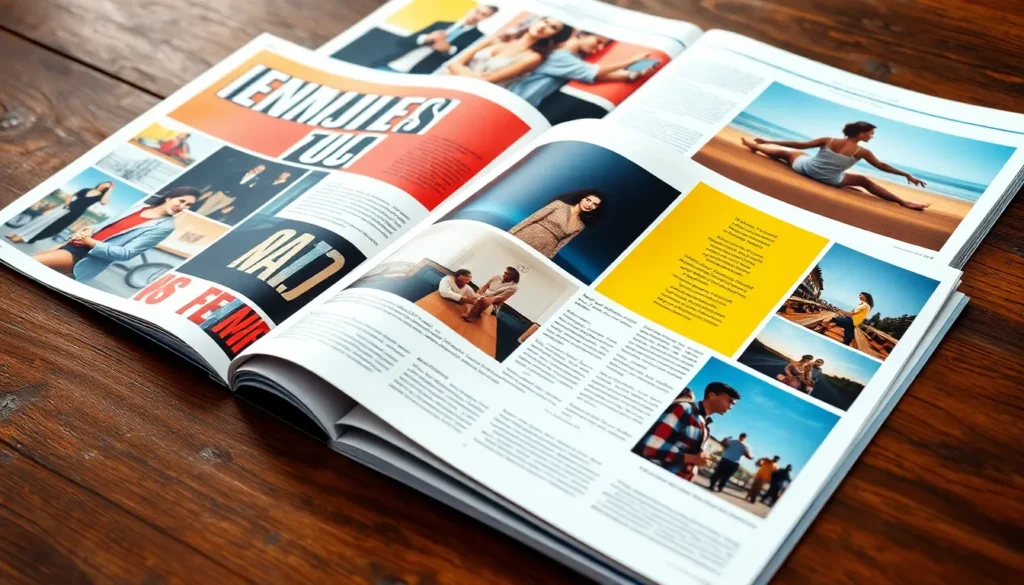
Visual aesthetics in magazines significantly influence how readers connect with content. A well-designed layout captures attention and maintains interest throughout the publication.
Impact on Reader Engagement
Engagement hinges on the effectiveness of visuals. Striking images and cohesive color schemes draw readers in and encourage long-term interaction with the material. Innovative typography enhances readability, making articles more enjoyable. Dynamic layouts guide reader’s eyes through text and images, creating a narrative flow. Together, these elements help to maintain focus and increase the likelihood of sharing content. When readers feel visually stimulated, they tend to spend more time with the publication, resulting in deeper engagement.
Role in Brand Identity
Brand identity relies heavily on consistent visual presentation. Elements like logo design, color palette, and typography create a distinct image that communicates values. Unique aesthetics differentiate a magazine from its competitors, allowing it to resonate with specific target audiences. Recognizable designs foster loyalty and trust, inviting readers to return for future issues. A cohesive visual identity strengthens overall branding efforts, effectively conveying the magazine’s mission and personality. Through visual elements, readers gain immediate insight into a magazine’s style and ethos.
Sources of Design Inspiration
Exploring diverse sources of design inspiration fuels creativity in magazine layouts. Unique aesthetics emerge from various fields, enhancing reader engagement and brand identity.
Nature and Art
Nature offers a rich palette of colors and patterns. Designers observe landscapes, flora, and fauna to influence layouts and imagery. Art movements provide historical context and innovative styles to draw from. Vibrant hues from nature inspire eye-catching color schemes, while organic shapes guide design elements. Incorporating natural textures can create depth in visual narratives. Artists’ techniques, from Impressionism to Abstract, influence typography and layout choices. Emulating these artistic expressions fosters a connection between visuals and content, inviting readers into a compelling experience.
Digital and Online Platforms
Social media platforms serve as vast resources for design inspiration. Pinterest showcases curated ideas and trending styles that resonate with audiences. Websites like Behance and Dribbble feature portfolios from creative professionals, revealing innovative approaches and fresh concepts. Online magazines and blogs offer insights into current design trends and emerging talents. Engaging with digital communities fosters collaboration and feedback, refining design concepts. Exploring multimedia presentations enhances layouts by integrating video and animation. Staying updated on apps and tools expands creative possibilities, making designs more dynamic and interconnected.
Trends in Magazine Design
Magazine design continues to evolve, reflecting contemporary aesthetics and reader preferences. Current trends display a dynamic interplay between minimalism and maximalism.
Minimalism vs. Maximalism
Minimalism emphasizes simplicity in layout. Clean lines, ample white space, and limited color palettes define this trend. Maximalism counters with bold designs featuring intricate patterns and multiple colors. Eye-catching visuals frequently appear alongside adventurous typography. Brands often select minimalistic approaches when aiming for a modern feel, while maximalism suits those targeting creative freedom. Striking a balance between these styles can attract diverse audiences. Magazines that incorporate elements from both trends provide a unique reading experience.
The Use of Typography
Typography plays a crucial role in magazine design. Different fonts can evoke distinct emotions and enhance brand identity. Utilizing a mix of serif and sans-serif fonts increases visual interest and guides reader navigation. Designers should prioritize readability, ensuring text remains clear regardless of layout complexity. Bold headlines capture attention while supporting the overall message. Subtle variations in font weight and style create visual hierarchy, directing readers through content. Effective typography strengthens storytelling by complementing imagery and reinforcing themes. Emphasizing innovative arrays of text invites engagement and fosters memorable connections with readers.
Case Studies of Innovative Magazine Designs
Several magazines exemplify innovative design strategies that captivate readers and enhance brand identity. Kinfolk focuses on minimalism, employing ample white space and muted color palettes to create a serene reading experience. This approach fosters a sense of calm and clarity, drawing readers into its lifestyle content.
Wired adopts a bold, maximalist style with vibrant colors and eclectic layouts. Eye-catching graphics and diverse typography reflect the magazine’s tech-savvy audience, making each issue striking and memorable. Dynamic visuals complement the content, encouraging greater reader engagement.
Next, The Gentlewoman merges editorial elegance with contemporary aesthetics. Sophisticated typography and striking photography highlight the magazine’s focus on women in fashion and culture. The visual consistency reinforces brand identity, inviting readers back for future editions.
Additionally, National Geographic showcases stunning imagery paired with informative layouts. High-quality photographs captivate viewers, while balanced text and visuals enhance storytelling. Readers enjoy immersive narratives that connect them to global cultures and environments.
Dwell features a distinct focus on architecture and design. Clean lines and a cohesive color scheme amplify its modern aesthetic. This design allows the showcase of stunning homes and innovative products, making it a go-to resource for enthusiasts.
Investing in unique design elements creates memorable visual experiences that resonate with target audiences. These case studies highlight how thoughtful magazine design can elevate content and strengthen brand loyalty. Each profile illustrates that when creativity meets strategy, the results can redefine reader expectations and enhance engagement.
Great magazine design is a powerful tool that shapes reader experiences and fosters lasting connections. By drawing inspiration from various sources and trends, designers can create visually striking layouts that resonate with audiences. Balancing minimalism and maximalism while utilizing effective typography enhances storytelling and brand identity.
Successful magazines serve as benchmarks for innovative design, showcasing how thoughtful aesthetics can elevate content and invite readers to engage more deeply. As designers continue to explore new ideas and collaborate within creative communities, the future of magazine design promises to be dynamic and inspiring. Ultimately, a commitment to creativity and strategy will redefine how magazines captivate and retain their audiences.